Call or Text: (904) 222-6988
Hours: Mon. – Fri. 9am – 8pm | Sat.–Sun. 10am – 6:30pm


Recognize. Ask. Listen. Connect.

Whether you’re concerned about someone else or looking for support yourself, every conversation has the power to make a difference. You don’t need the perfect words, just the willingness to start.

Step One

Recognize the Signs

Struggling doesn’t always look like a crisis. Someone can seem fine, successful, even happy, while feeling overwhelmed, disconnected, or unlike themselves. Recognizing the signs starts with paying attention, not diagnosing.

Step TWO

Start the Conversation

You don’t need training or to know the right thing to say to check in. You need to be willing to ask, even the hard question: Are you thinking about suicide?

Step Three

Listen with Compassion

Listening, not fixing, is one of the most powerful things you can offer. Just let the person talk, or not. Quiet moments are okay too. What is most important is being truly present.

Step Four

Stay Connected

One conversation is a start, not a finish line. Stay connected, check in again, and know when to bring in more support to keep someone moving toward hope.

Free & Downloadable

Conversation Guides

We have created a series of guides to help you recognize the signs, start the conversation and respond with confidence. They are free to download, print and share. Grab what’s useful for you or pass it along to someone else.

Download Your Guide to Start the Conversation

Need more support?

If you’re looking for help today—or helping someone else—we’re here.

If you or someone you know is in immediate danger, call or text 988, or text HOME to 741741.

Here Tomorrow is not a crisis line, but connects you to ongoing, confidential peer support at no cost.

Help Spread the Message

Share the Conversation

One conversation can make a difference—and one shared post can help start hundreds more. Download these graphics and share them on your social channels, in your workplace, school or community to help more people recognize the signs and start the conversation.

Share These Posts on Social Media to Keep the Conversation Going

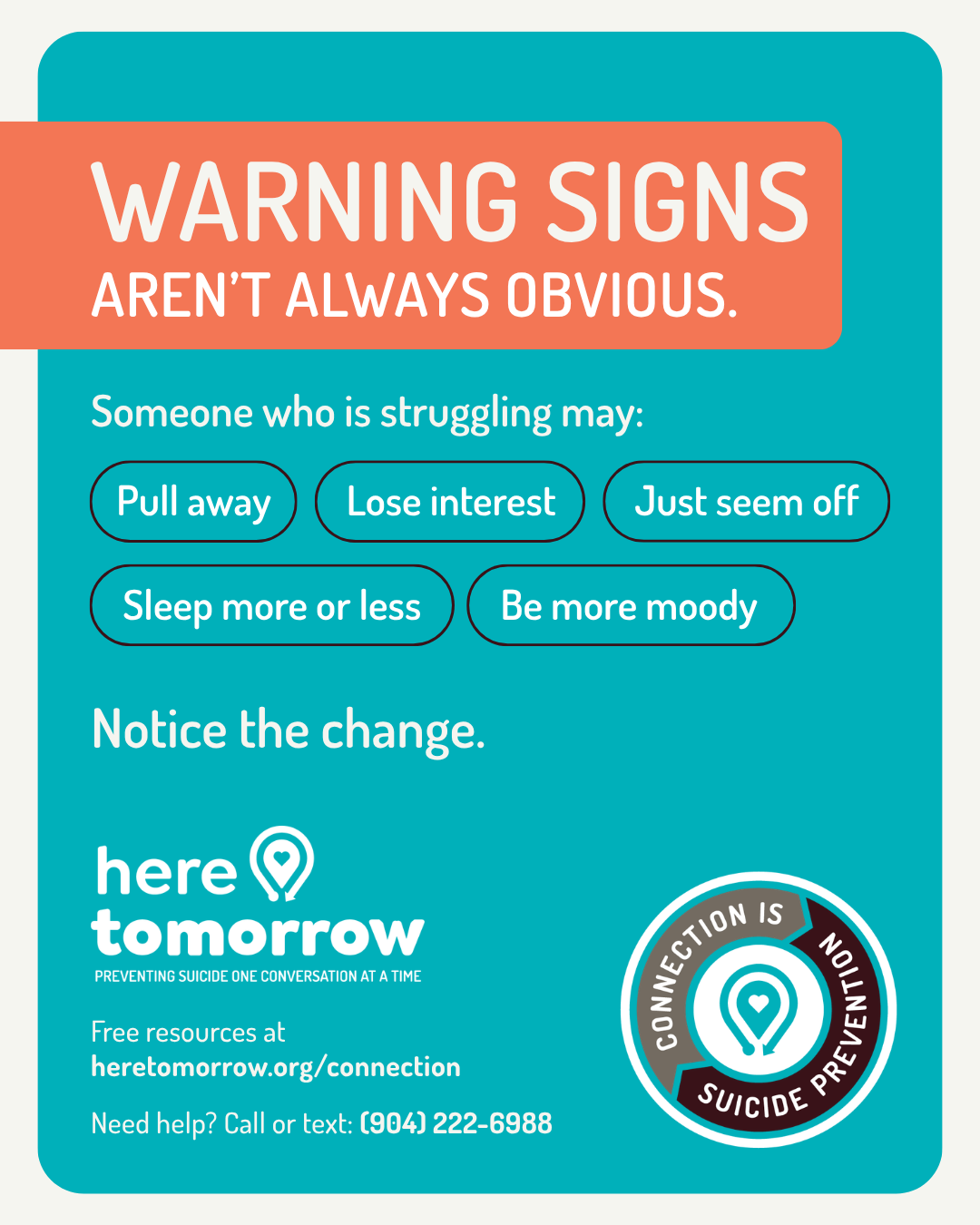
Infographic about subtle warning signs of suicide, including changes in mood, sleep, and behavior, with mental health resources and a crisis contact number for suicide prevention at the bottom.

Warning signs aren't always obvious

Help others recognize that struggling doesn't always look like a crisis. Share this graphic to encourage friends and family to notice the everyday signs someone may need support.

Suggested Post:
It's Suicide Prevention Awareness Month, and we're helping Here Tomorrow spread the word. Struggling doesn't always look like a crisis. Sometimes it looks like someone pulling away, sleeping more or less, or just seeming “off.” Share this post so more people in your circle know what to look for, before a crisis is what makes them notice. Connection is suicide prevention. Free conversation guides at heretomorrow.org/connection.
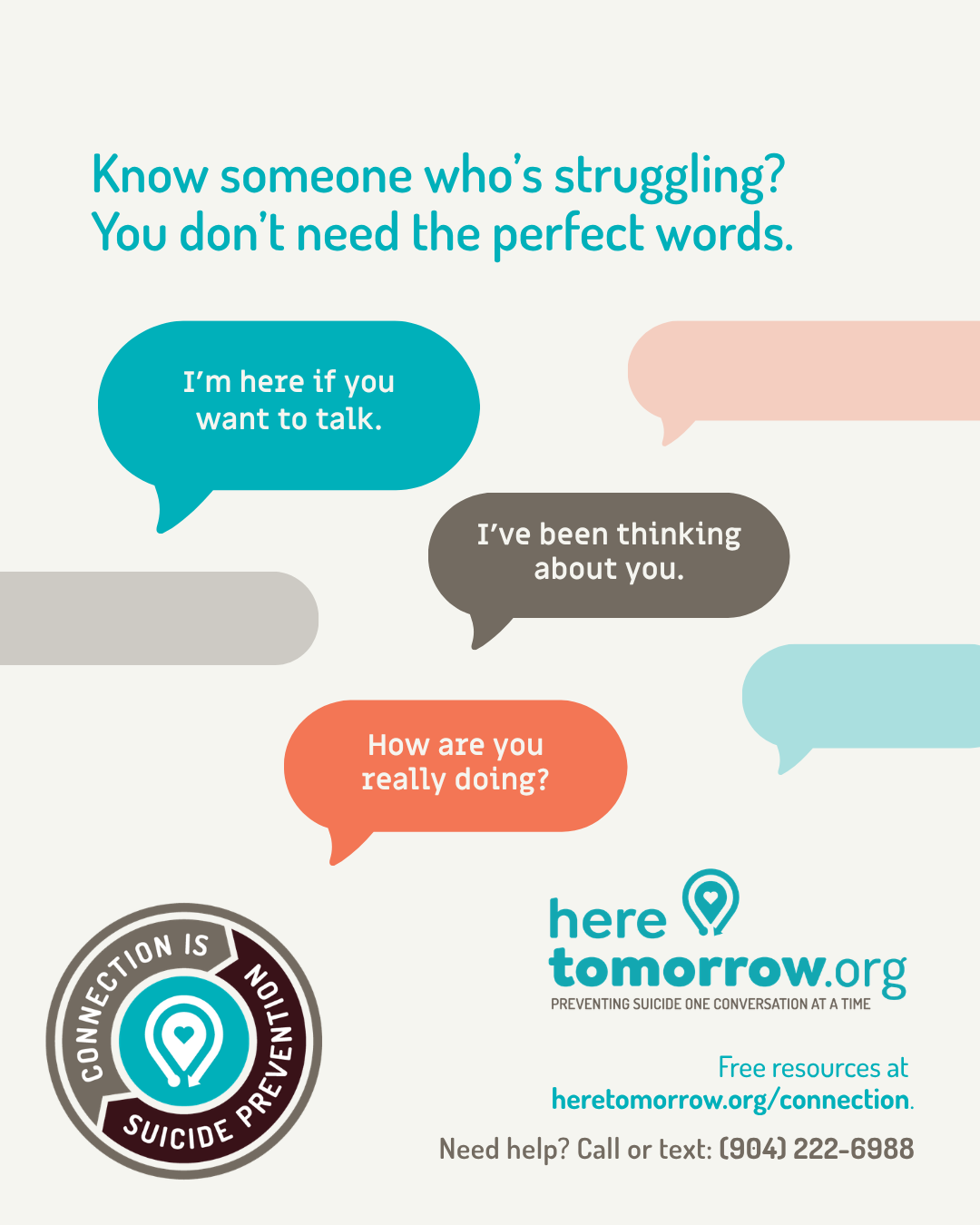
Informational flyer about suicide prevention, highlighting supportive phrases and contact details for heretomorrow.org, including the phone number (904) 222-6988 for help. Discover essential suicide prevention resources and mental health support to guide you or your loved ones through challenging times.

You Don't Need the Perfect Words

Starting the conversation doesn't require the perfect response—just the willingness to ask. Share this graphic to help more people feel confident reaching out.

Suggested Post:
This September is Suicide Prevention Awareness Month. Here's one easy way to get involved: share this. You don't need to be a therapist to check in on someone, you just need to be willing to ask. Try: “You haven't seemed like yourself lately, what's going on?” or simply, “I've been thinking about you, how are you really doing?” Asking directly about suicide doesn't plant the idea, it opens the door. Share this post to help Here Tomorrow put a conversation starter in more people's hands this month.